Pad Thai noodles: which to buy and how to soak them
Which rice noodles to use for Pad Thai, how wide they should be, how long to soak them and what to do when they turn sticky or break.
Read more →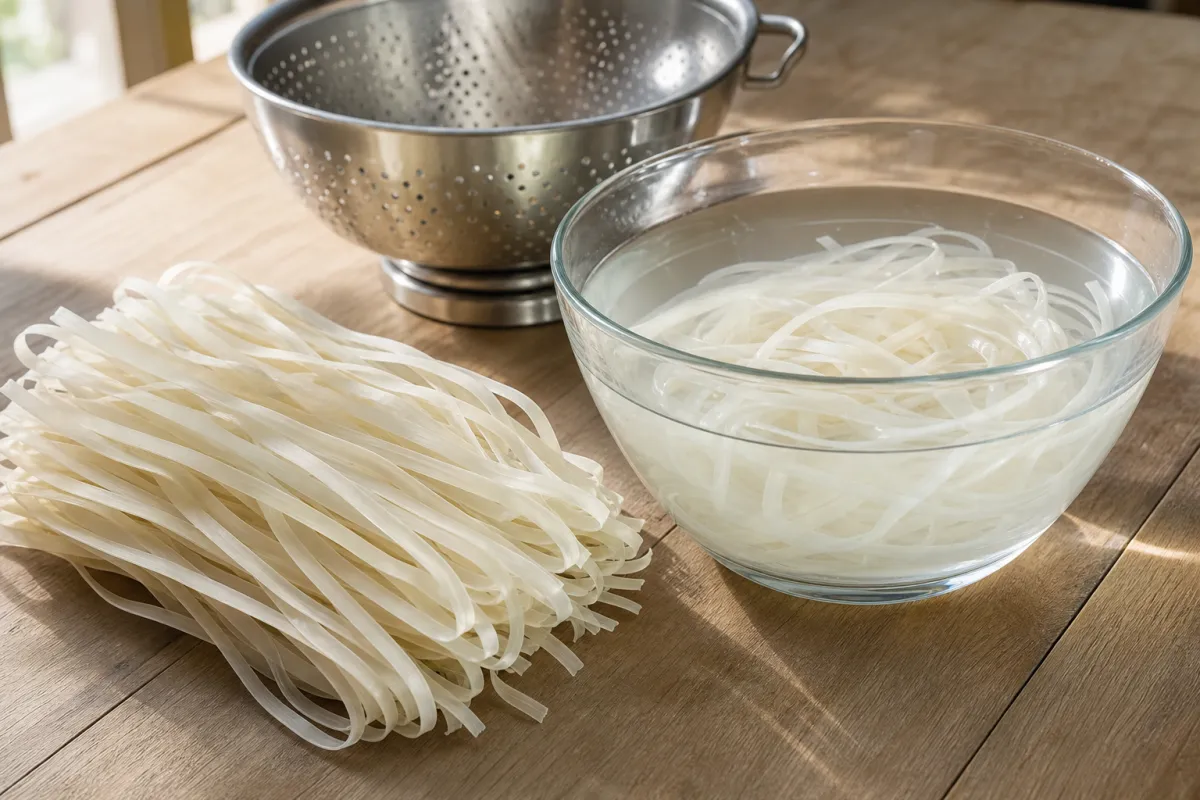
Master the essentials
Pad Thai is made with dried flat rice noodles, often labelled “rice sticks” or “Pad Thai noodles”. The single most important rule: don’t boil them. Soak them in lukewarm water until they bend but are still firm in the centre, and let them finish cooking in the wok, where they absorb the sauce instead of plain water.
Method
- 01
Weigh the noodles: about 80 g dried noodles per person (160 g for 2). They roughly double in weight once soaked.
- 02
Put them in a large bowl and cover generously with lukewarm water — around body temperature, not hot from the kettle.
- 03
Soak 3–5 mm noodles for 25–30 minutes; very thin ones need less, extra-wide ones more. Start checking after 20 minutes.
- 04
They’re ready when they bend easily and look white and opaque with a slightly firm, translucent core. They should not be soft enough to eat yet.
- 05
Drain well in a colander. If you’re not cooking straight away, toss them with a teaspoon of oil so they don’t stick together, and use them within about 30 minutes.
- 06
In the wok, add the noodles together with the sauce and a splash of water if needed. They finish cooking in 2–3 minutes.
Cooking tips
Sticky, mushy noodles mean the water was too hot or they soaked too long. Next time use cooler water and drain them while the centre is still firm.
Noodles still hard in the wok? Add water 2 tbsp at a time and keep tossing. A little steam finishes them without making them soggy.
Noodles breaking into short pieces usually means too much stirring with a spatula. Toss them with two utensils or lift and fold instead.
Which noodles to buy
Look for dried flat rice noodles about 3–5 mm wide. The packet is often labelled “rice sticks”, “rice noodles M” (medium) or simply “Pad Thai noodles”; Thai brands sometimes mention Chanthaburi, the province known for these noodles. The only ingredients should be rice and water, sometimes with a little tapioca starch.
Thin rice vermicelli is meant for soups and spring rolls and falls apart in a wok. Very wide rice noodles (around 1 cm) are used for other dishes such as pad see ew and are harder to fry evenly.
Fresh rice noodles
Fresh rice noodles from the chiller cabinet of an Asian shop work too. Don’t soak them: separate the strands gently, briefly rinse with warm water if they are stiff, and add them to the wok with the sauce. Use about 150 g fresh noodles per person.
Can I use other noodles?
Brown rice noodles of the same width work well and are cooked the same way, though they may need a few minutes more soaking. Wheat or egg noodles give you a tasty stir-fry, but not Pad Thai: they absorb the sauce differently and contain gluten.
Are Pad Thai noodles gluten-free?
Plain rice noodles are naturally gluten-free. Check the label for wheat starch in blended products and for “may contain” warnings if you’re cooking for someone with coeliac disease.
Frequently asked questions
Do you boil noodles for Pad Thai?
No. Soak dried rice noodles in lukewarm water for 25–30 minutes and let them finish cooking in the wok with the sauce.
How much dried noodles per person?
About 80 g of dried rice noodles per person as a main course.
Can I soak the noodles in advance?
Up to about 30 minutes before cooking. Drain them and toss with a little oil; after that they start to stick and go soft.