THAI COOKING · HOME KITCHEN

Pad Thai recipe, step by step

Rice noodles, tamarind sauce, egg, tofu, bean sprouts and roasted peanuts. A recipe for 2 that works in a wok or a large frying pan on a normal hob.

✦ Under 10 minutes of cooking — the preparation is what counts.
♧Clear quantities
◈Step-by-step
♨Useful swaps
✳Thai inspiration
THE ESSENTIALS

Master the essentials

🌿

Know your ingredients

You need flat rice noodles 3–5 mm wide (often sold as “Pad Thai noodles” or “rice sticks”), tamarind and fish sauce — all available in Asian shops and larger supermarkets.

🥣

Balance your sauce

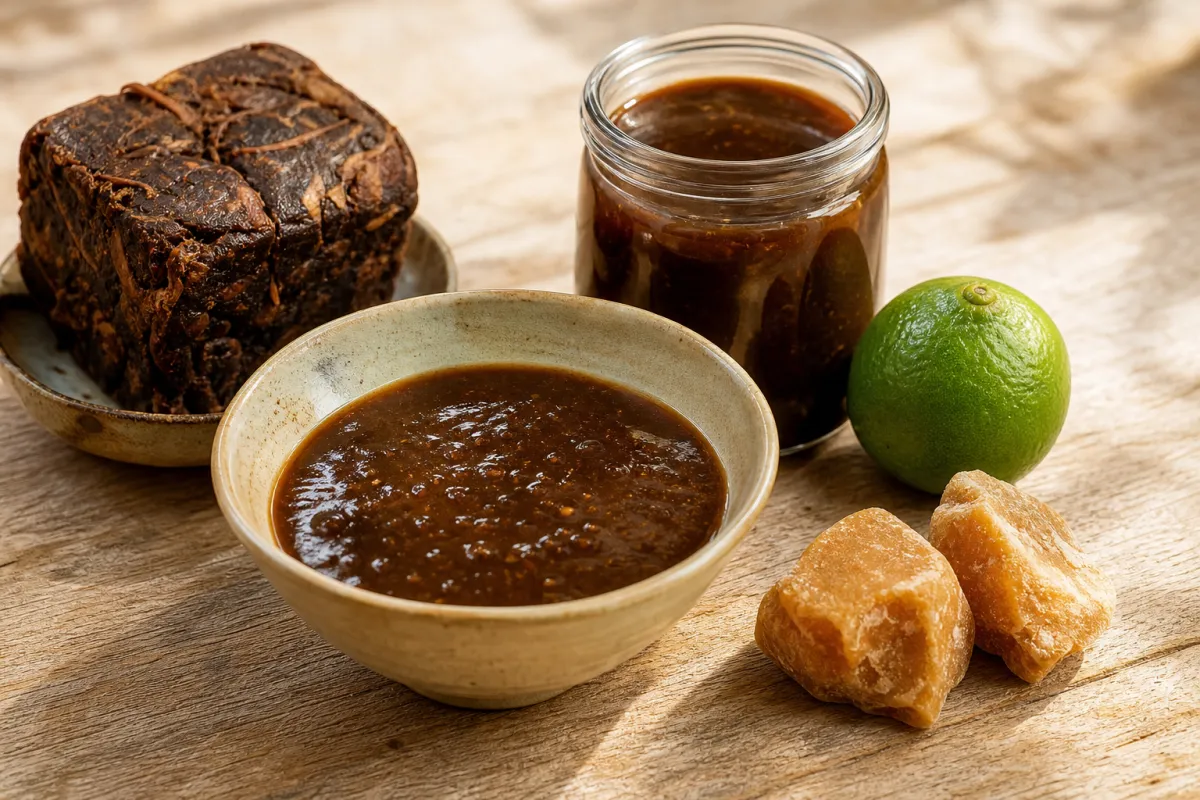
The classic ratio is roughly 3 parts tamarind, 2 parts fish sauce and 2–3 parts palm sugar. Brands vary a lot, so always taste the sauce.

♨

Master the heat

A really hot wok or wide frying pan and small batches: that way the noodles fry rather than stew in their own steam.

✦

Avoid common mistakes

Common mistakes: boiling the noodles, adding the sauce without tasting it, overcrowding the wok and overcooking the bean sprouts.

PAD THAI

The recipe, step by step

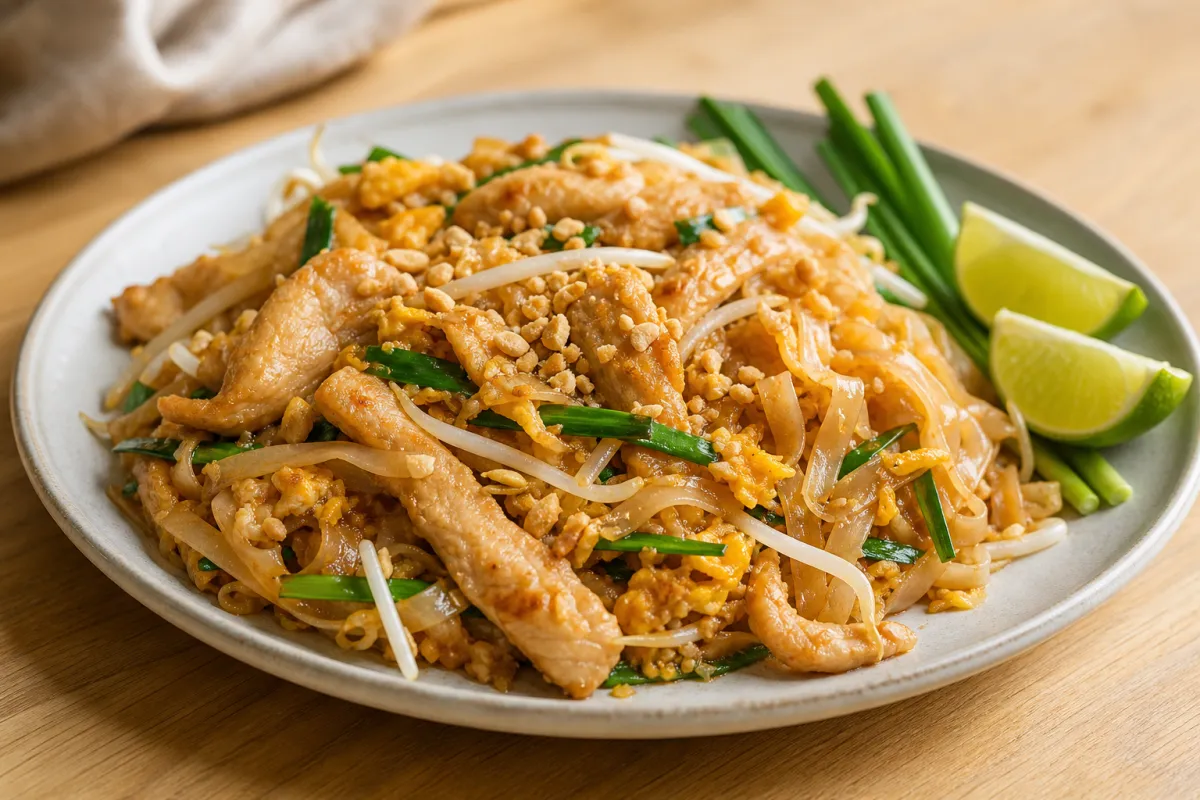
Pad Thai is stir-fried rice noodles in a sauce that balances the fruity sourness of tamarind, the saltiness of fish sauce and the sweetness of palm sugar. This is the tofu-and-egg version: the classic base, which you can easily turn into chicken or prawn Pad Thai.

◷30 + 10 minTotal time
♨EasyDifficulty
♧2Servings
01 · MISE EN PLACE

Ingredients

  • 160g
  • 45ml
  • 30ml
  • 35g
  • 45ml
  • 150g
  • 2
  • 2
  • 1
  • 120g
  • 30g
  • 30g
  • 1

* Tamarind purée, not concentrated paste. Always follow your product label.

02 · WOK TIME

Method

  1. 01

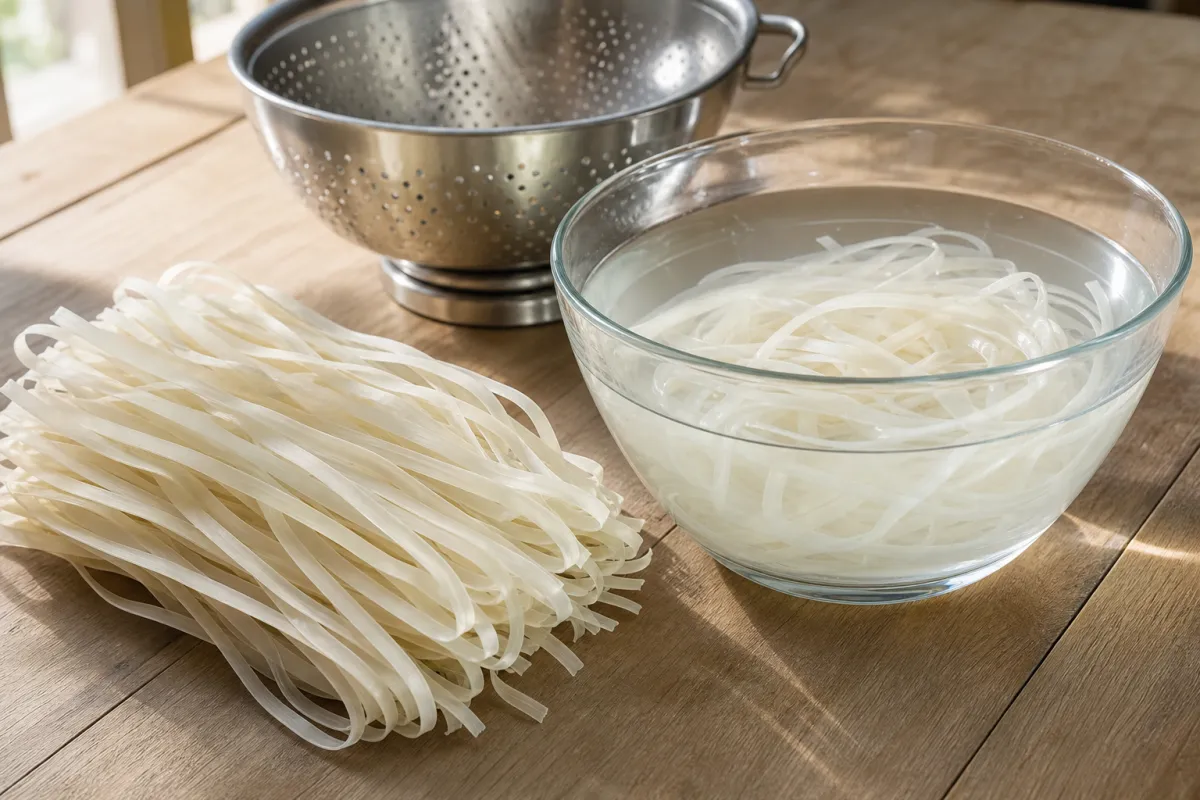
    Soak the noodles in lukewarm (not boiling) water for 25–30 minutes, or as the packet says. They should bend easily but still have a slightly firm core. Drain — they finish cooking in the wok.

  2. 02

    Warm the tamarind purée, fish sauce and palm sugar in a small pan for 1–2 minutes until the sugar dissolves. Taste: the sauce should be clearly sour, salty and sweet at the same time. Adjust it now, not in the wok.

  3. 03

    Get everything ready next to the hob: tofu, garlic, shallot, eggs, bean sprouts, chives, peanuts and lime. The cooking only takes a few minutes.

  4. 04

    Heat the wok over a high heat with 2 tbsp oil and fry the tofu for 3–4 minutes until golden on several sides. Lift out onto a plate.

  5. 05

    Add the rest of the oil, the garlic and shallot and stir-fry for 20–30 seconds until fragrant — don’t let them brown.

  6. 06

    Add the drained noodles and the sauce. Toss for 2–3 minutes. If the noodles are still hard and the wok is getting dry, add water 2 tbsp at a time. They’re done when soft but springy and the sauce has been absorbed.

  7. 07

    Push the noodles to one side and crack the eggs into the space. Leave for 20–30 seconds until they start to set, then scramble with the spatula and toss through the noodles.

  8. 08

    Return the tofu, add most of the bean sprouts and the chives and toss for about 30 seconds more — the sprouts should stay crunchy.

  9. 09

    Serve straight away, scattered with peanuts, with lime wedges and the remaining raw sprouts. At the table everyone can add lime juice, chilli flakes, sugar or fish sauce to taste.

03 · COOK SMART

Cooking tips

◉

Noodles sticky or broken? They were probably soaked in water that was too hot, or for too long. Use lukewarm water and drain while the centre is still firm.

✳

Don’t cook more than 2 portions at once. In an overcrowded wok the noodles steam instead of frying and turn mushy — for 4 people, cook in two batches.

♨

Sauce too sour? Add a little sugar. Too sweet or flat? A few drops of fish sauce and lime. Always taste before it goes in.

What is Pad Thai?

Pad Thai (phat thai, “Thai-style stir-fry”) is one of Thailand’s best-known dishes: flat rice noodles stir-fried with a sauce of tamarind, fish sauce and palm sugar, with egg, tofu, bean sprouts and garlic chives, served with lime and roasted peanuts.

It was popularised in Thailand in the 1930s and 1940s and is now a street-food staple. In Bangkok you’ll often get it with prawns; at home, tofu, prawns or chicken all work well.

Which noodles for Pad Thai?

Use dried flat rice noodles about 3–5 mm wide. Don’t boil them: a soak in lukewarm water is enough, and the sauce and heat of the wok do the rest. Very thin rice vermicelli breaks up, and very wide ribbons are hard to fry evenly. Fresh rice noodles can be used too — skip the soaking and just loosen them before frying.

How to make Pad Thai sauce

For 2 portions you need about 100 ml of sauce: 45 ml tamarind purée, 30 ml fish sauce and 35 g palm sugar, warmed until the sugar dissolves. Shop-bought Pad Thai sauces are often much sweeter and thickened with starch.

If you have a block of tamarind, pour 150 ml hot water over 50 g, leave for 15 minutes, mash and push through a sieve. Tamarind concentrate in a jar is several times stronger — start with 1 tbsp diluted with water. Ketchup, oyster sauce and peanut butter don’t belong in the classic sauce.

Chicken or prawn Pad Thai

Chicken: use 250 g boneless chicken thighs or breast in thin 5 mm strips instead of the tofu. Stir-fry for 4–5 minutes until completely white inside (75 °C if you have a thermometer), lift out and return with the bean sprouts so it stays juicy.

Prawns: use 200 g raw peeled prawns. Fry for 1½–2 minutes until pink and opaque, lift out and return in the second-to-last step. Defrost frozen prawns in the fridge or in cold water and pat them very dry.

Vegetarian Pad Thai

Swap the fish sauce for light soy sauce or tamari (start with less — it’s often saltier; regular soy sauce contains gluten). Leave out the egg or replace it with extra tofu and the dish is vegan.
Frequently asked questions

Do you boil rice noodles for Pad Thai?

No. Soak them in lukewarm water for 25–30 minutes. They finish cooking in the wok in the sauce; pre-boiled noodles turn mushy.

What are the main Pad Thai ingredients?

Flat rice noodles, tamarind, fish sauce, palm sugar, egg, garlic, shallot, bean sprouts, garlic chives, roasted peanuts and lime, plus tofu, prawns or chicken.

Can I make Pad Thai ahead?

It’s best eaten straight away. You can make the sauce a few days ahead and keep it in the fridge, then soak the noodles just before cooking.

Is Pad Thai gluten-free?

Rice noodles, tamarind and most fish sauces are gluten-free, but always check the labels. If you use soy sauce, choose a gluten-free tamari.